Healthcare CRM Development
Healthcare CRM development services help healthcare organisations to manage patient relationships, enquiries, follow-ups, communication and coordination all in one centralised system. Niishflow doesn’t use generic software; it creates custom CRM solutions based on workflows, operations, team composition, and integrations for more effective results.
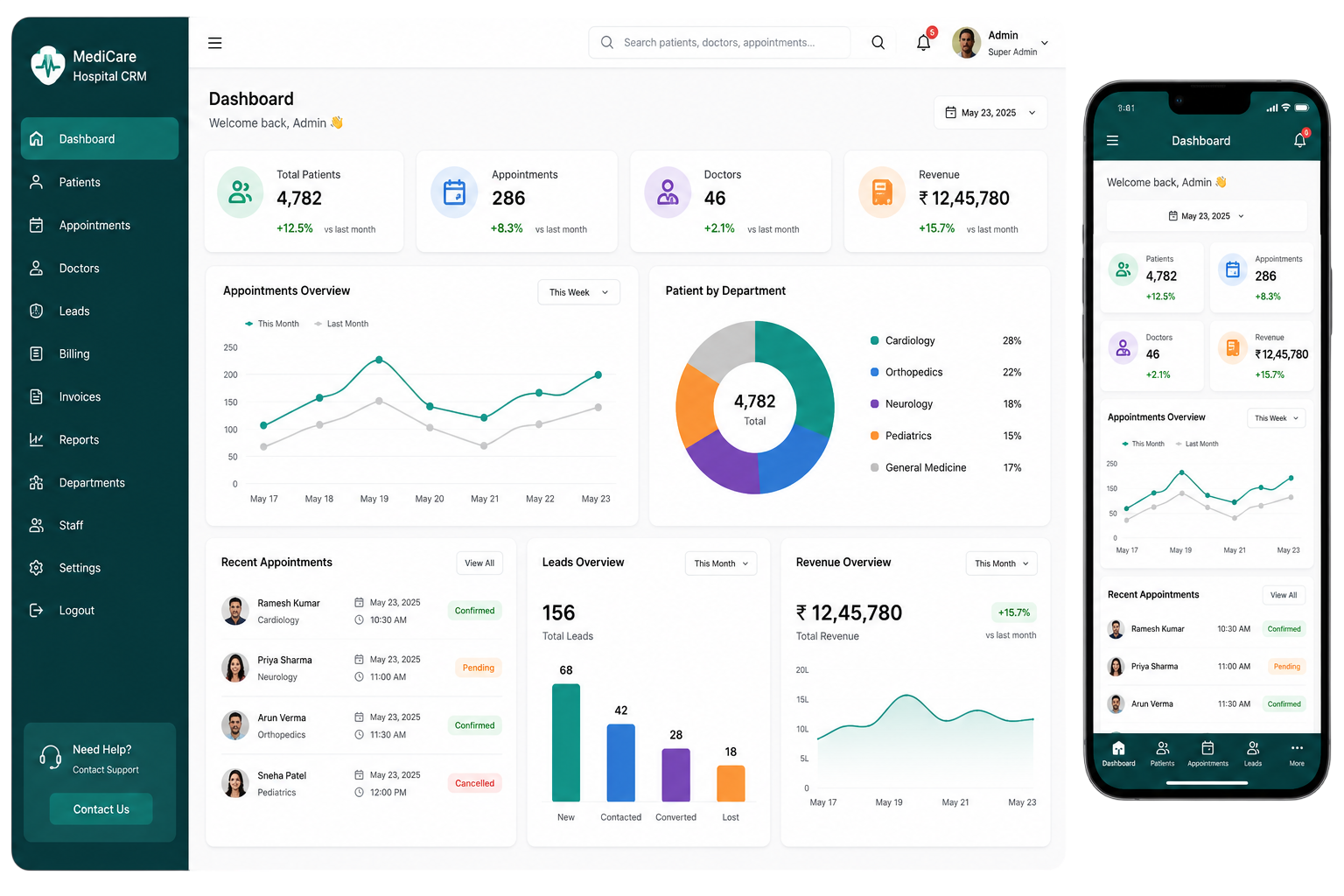


What is Healthcare CRM?
A Healthcare CRM is a centralized software system designed to manage and improve relationships between healthcare providers and patients. It helps organize patient data, enquiries, appointments, communication history, and follow-ups in one place.
Unlike traditional systems, a healthcare CRM focuses on engagement, coordination, and operational efficiency across teams.
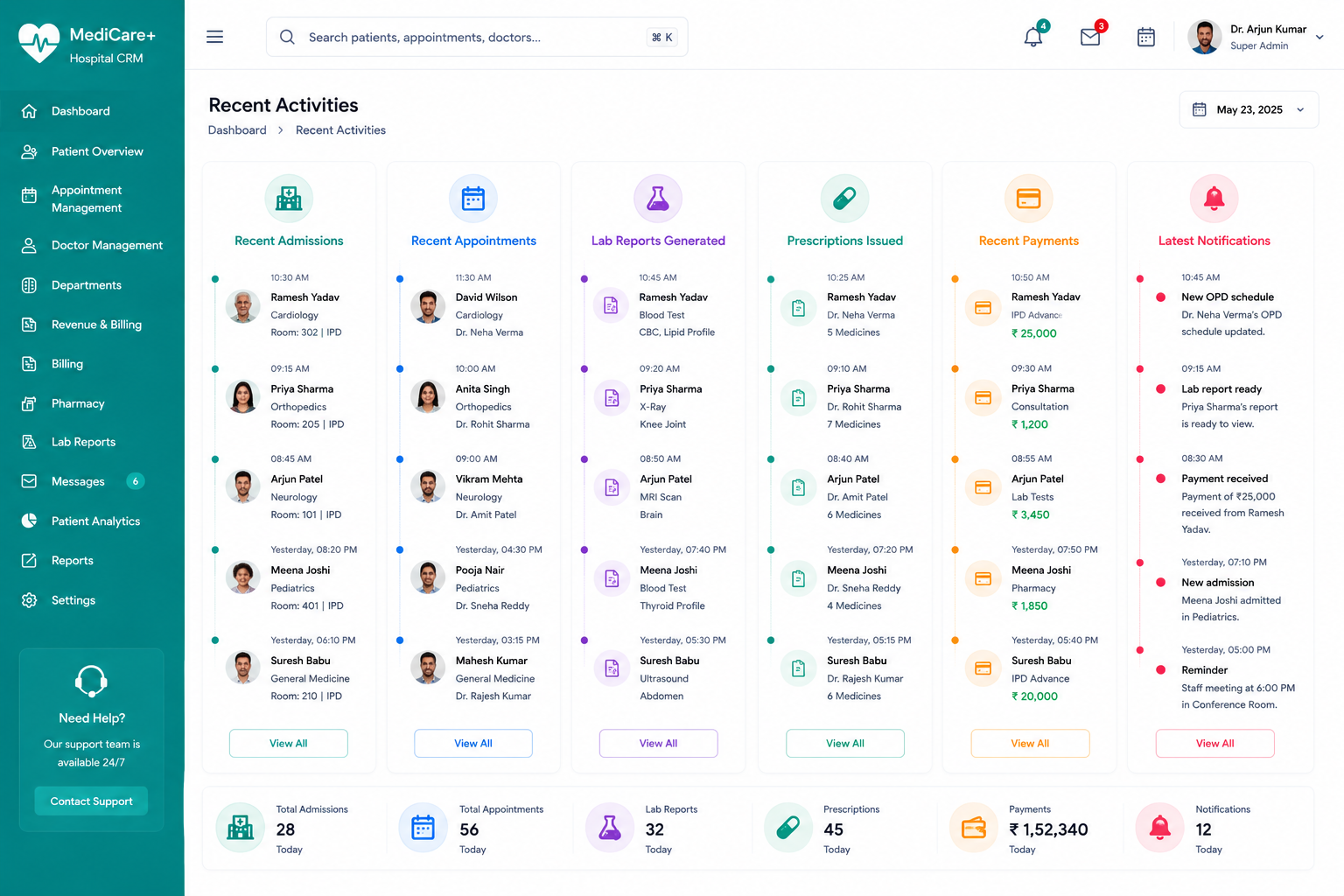
It enables hospitals, clinics, and healthcare organizations to track every patient interaction from first enquiry to ongoing care. By connecting departments and automating routine tasks, it improves service quality, reduces manual effort, and ensures better patient experience. It acts as a bridge between healthcare operations and patient relationship management.
Healthcare CRM Software Development
for Modern
Healthcare Businesses
Healthcare CRM can aid clinics, hospitals, diagnostic centres, medical groups, wellness providers, or any other healthcare organisation to arrange interactions across the patient journey.
The CRM can help teams visualise all interactions, starting from capturing enquiries and setting up follow-ups to communication and service request tracking.
Healthcare CRM development can help you create a system that unites the functions your teams actually use and gives pertinent information when they need it.
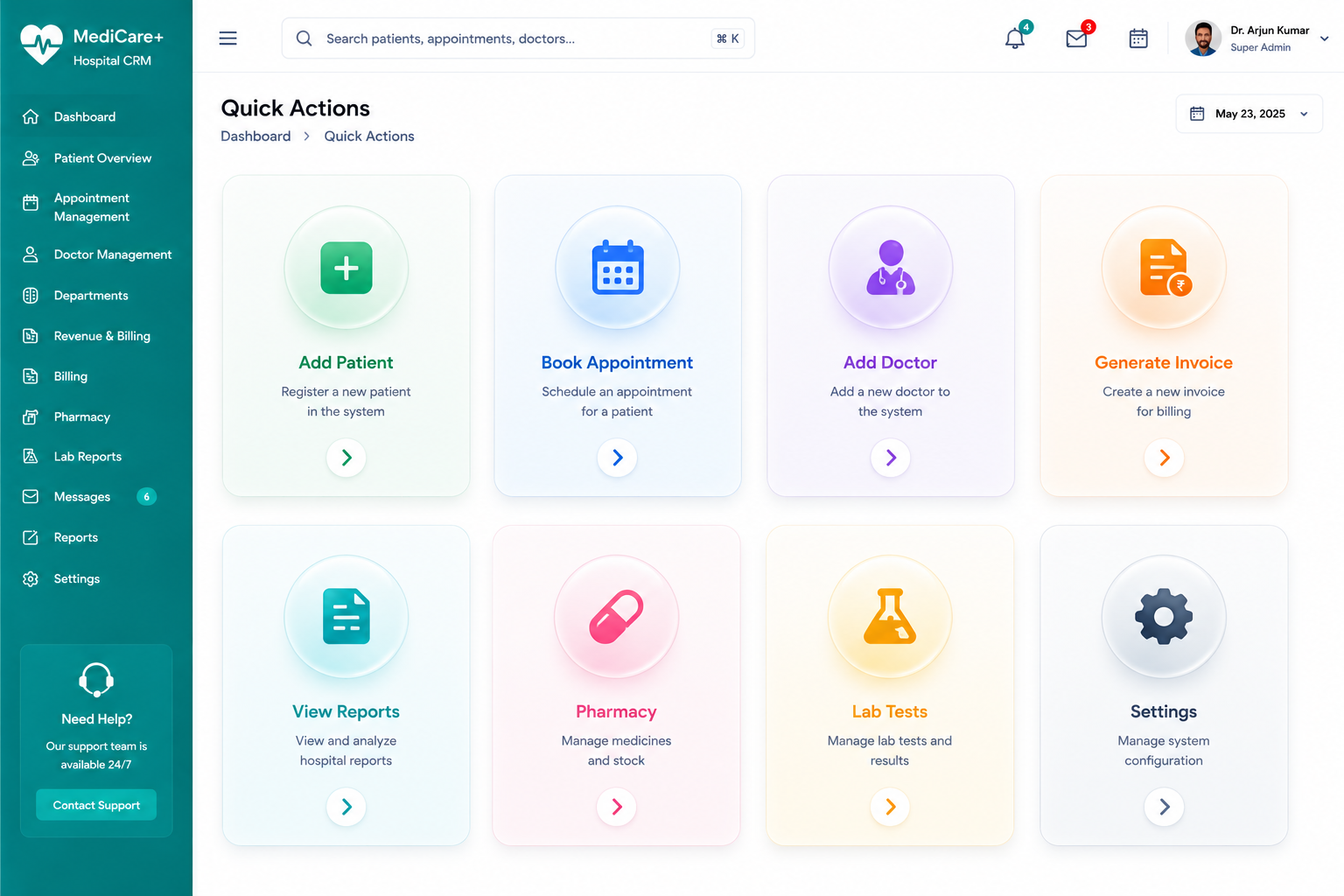
Key Features of Healthcare CRM Software
Patient & Contact Management
Centralize patient and contact information, interaction history, and follow-up details in one secure and easily accessible system.
Lead & Enquiry Management
Capturing patient enquiries from multiple channels becomes more organized with a centralized system that helps healthcare teams track, assign, and manage each lead through a structured conversion journey.
Appointment & Follow-Up Management
Healthcare staff can efficiently schedule appointments, set reminders, and manage follow-ups in a structured way, ensuring better time management and reducing chances of missed patient interactions.
Patient Communication
All patient interactions and communication history are stored in a unified system, allowing healthcare teams to understand context clearly and respond more effectively with consistent and personalized communication.
Workflow Automation
Routine healthcare operations are streamlined through automation that handles tasks such as assigning leads, sending reminders, triggering notifications, and managing internal workflows without manual effort.
Service & Case Management
Patient requests, service issues, and complaint cases are tracked in a structured manner, enabling healthcare teams to prioritize, monitor, and resolve them faster with improved service quality.
Reports & Analytics
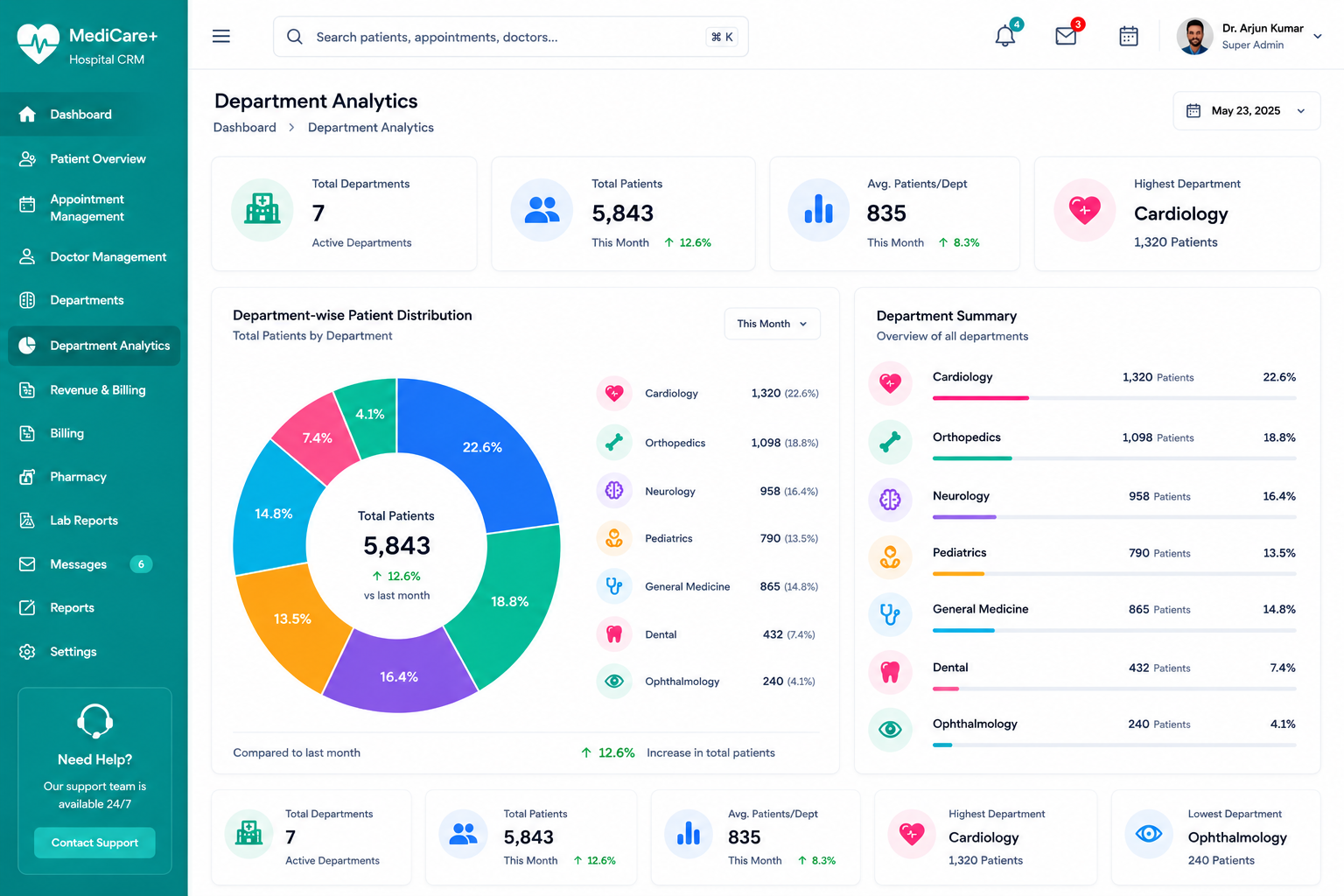
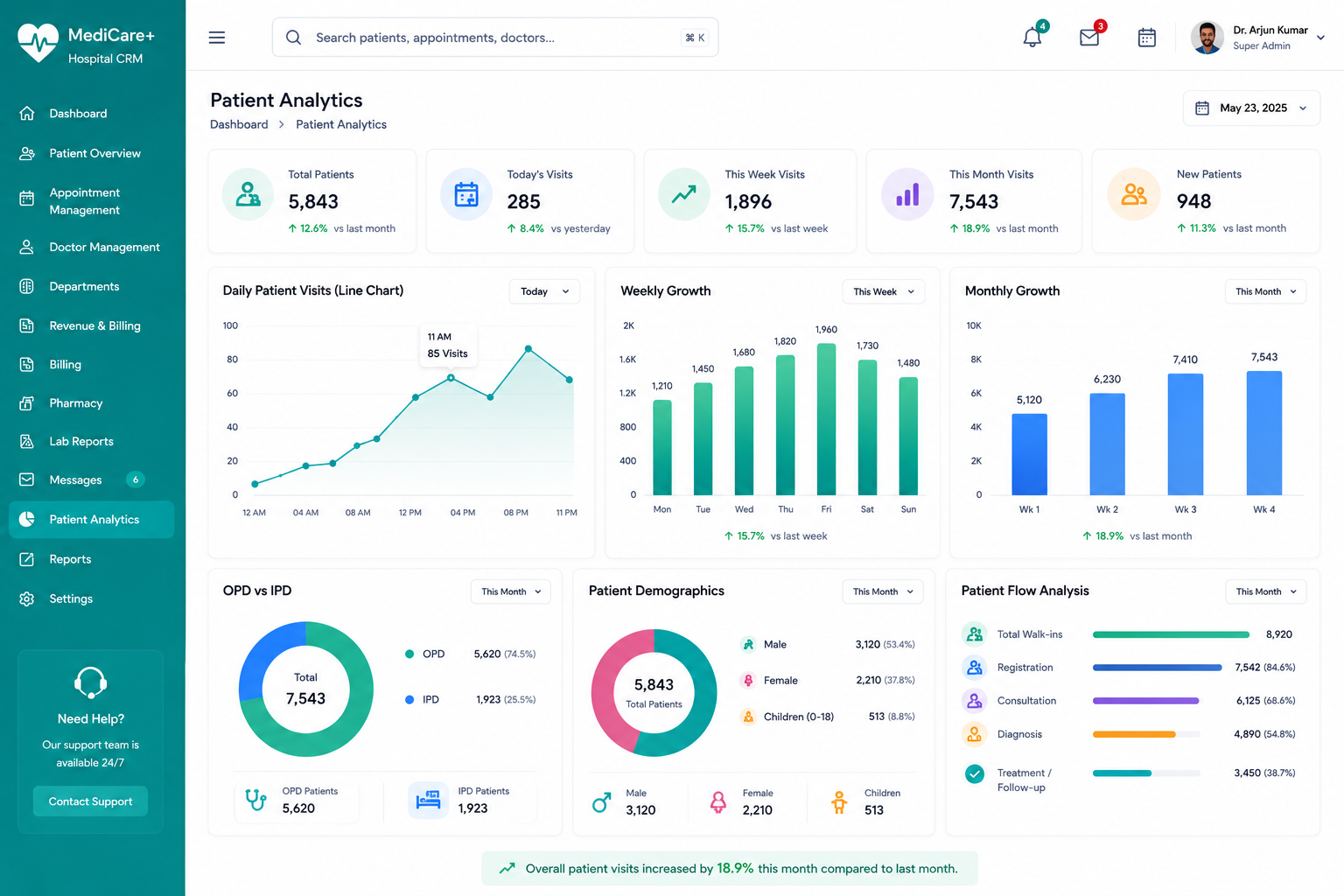
Detailed dashboards and reports provide insights into patient behavior, operational performance, conversion rates, and overall efficiency, helping healthcare organizations make informed and data-driven decisions.
Role-Based Access
Secure access control is implemented by defining user roles and permissions, ensuring that sensitive patient data is protected while maintaining smooth operational access for authorized staff.
Third-Party Integrations
External systems such as billing software, communication tools, and scheduling platforms can be connected seamlessly, enabling healthcare organizations to operate within a unified and efficient digital ecosystem.
Benefits of a Healthcare CRM
A healthcare CRM is not simply a database for storing patient information. When designed around your processes, it can help different teams work with the same information and maintain more consistent patient communication.
Centralized information
A unified system brings together patient records, enquiry details, and interaction history in one place, giving healthcare teams better visibility, organized access, and stronger control over daily operations and data management.
Better follow-up management
Timely patient and enquiry follow-ups are ensured through automated reminders, scheduled tasks, and structured tracking, helping healthcare teams maintain consistent communication and never miss important interactions or opportunities.
Improved team coordination
Shared access to updated patient data and operational information enables smoother collaboration among healthcare teams, improving communication flow, faster decision-making, and more coordinated service delivery across departments.
Less manual administration
Routine administrative work is minimized through automation of data entry, notifications, and repetitive workflows, allowing staff to dedicate more time to patient care, service improvement, and critical healthcare activities.

Clearer business visibility
Real-time dashboards and analytics offer insights into patient flow, performance metrics, and operational activities, enabling healthcare organizations to make accurate, data-driven decisions with improved efficiency and strategic clarity.
Scalable workflows
Flexible system architecture allows easy expansion of users, modules, and processes, ensuring the platform grows seamlessly with evolving healthcare needs while maintaining performance, stability, and operational consistency.
Healthcare CRM Development
Services We
Offer
Every healthcare organization has different workflows. A small clinic may need a simple patient enquiry and follow-up system, while a multi-location healthcare group may require advanced workflows, integrations, reporting, and access controls.
The exact modules and workflows can be planned according to your organization's requirements.
Our healthcare CRM development services can include:
-
Custom healthcare CRM development
-
CRM customization and workflow development
-
Patient and contact management solutions
-
Healthcare lead management
-
Appointment and follow-up workflows
-
CRM integration and API development
-
Reporting and dashboard development
-
CRM automation
-
Role and permission management
-
CRM migration and data integration
-
Ongoing support and enhancements
Integrating Healthcare CRM With Your Existing Systems
In a healthcare organisation, there are many applications that can be used for various tasks. Your CRM does not have to replace every system your organization already uses. It can be designed to work alongside existing applications and connect with them where integration is required.
Integration requirements should be assessed individually because healthcare data, workflows, access permissions, and system capabilities vary from one organization to another.
Depending on your requirements, integrations may include:
Our Approach to Healthcare CRM Software Development
We start by understanding how your teams currently manage patient and customer interactions.
1. Understand Your Workflow
Analyzing existing healthcare operations, team structure, and daily challenges helps identify gaps, improve communication flow, and build a system that truly supports real-time clinical and administrative processes effectively.
2. Define CRM Requirements
Based on organizational goals and healthcare operations, required modules, user roles, workflows, and integrations are planned carefully to ensure smooth functionality, better coordination, and alignment with the organization’s specific requirements.
3. Design the CRM Experience
User-centric dashboards and intuitive workflows are created to reflect real healthcare environments, making it easier for staff to manage patient data, reduce complexity, and improve overall operational efficiency.
4. Develop & Integrate
Core features are built and connected with third-party systems to ensure seamless data exchange, automation of tasks, and improved collaboration across departments within healthcare organizations.
5. Test the Platform
Before deployment, workflows, data accuracy, security layers, and integrations are thoroughly tested to detect issues early and ensure stable, reliable performance in real-world healthcare scenarios.
6. Launch & Improve
After deployment, continuous monitoring, updates, and enhancements are carried out based on user feedback to ensure the system adapts to evolving healthcare requirements and operational improvements over time.
Built Around Your Healthcare Business
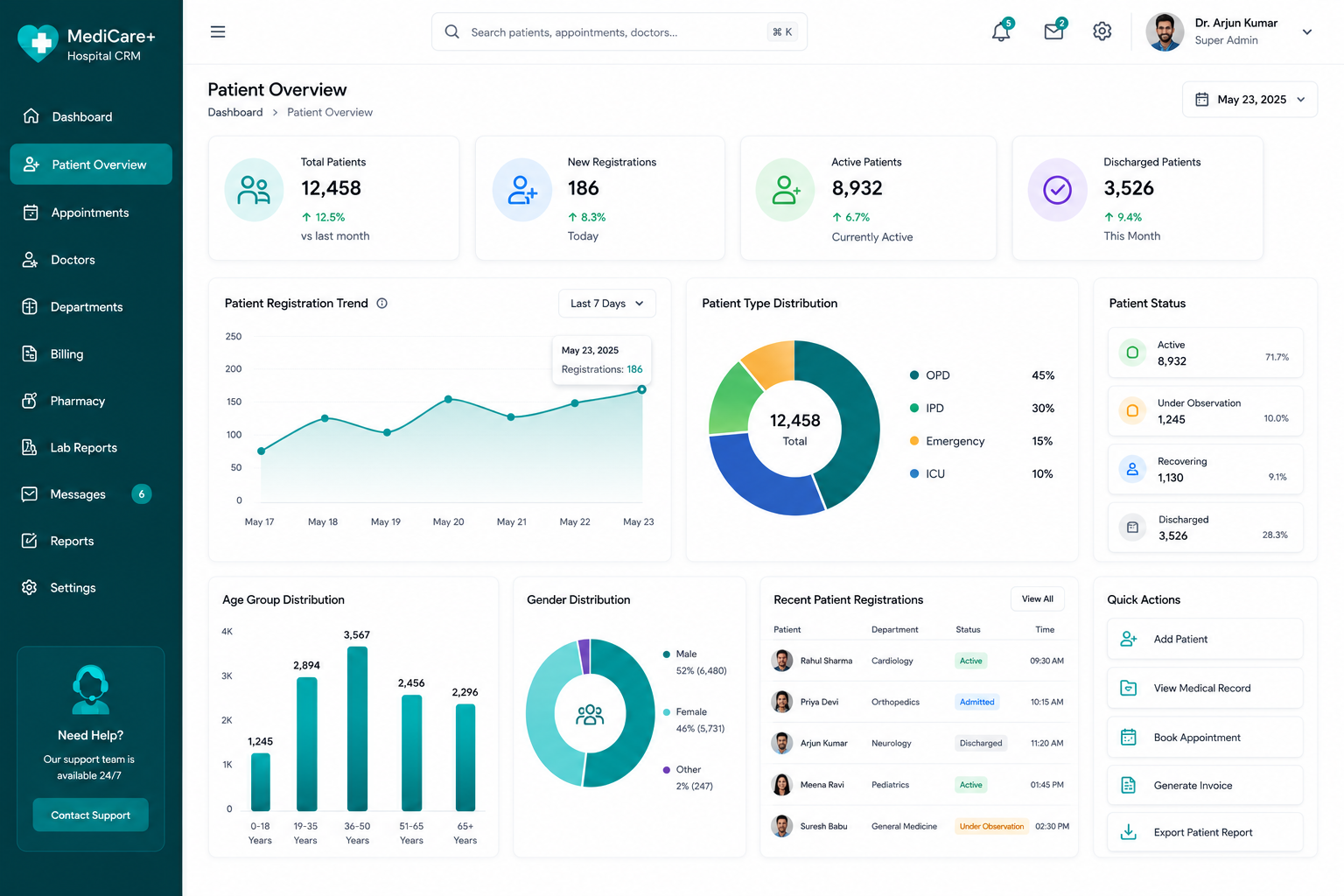
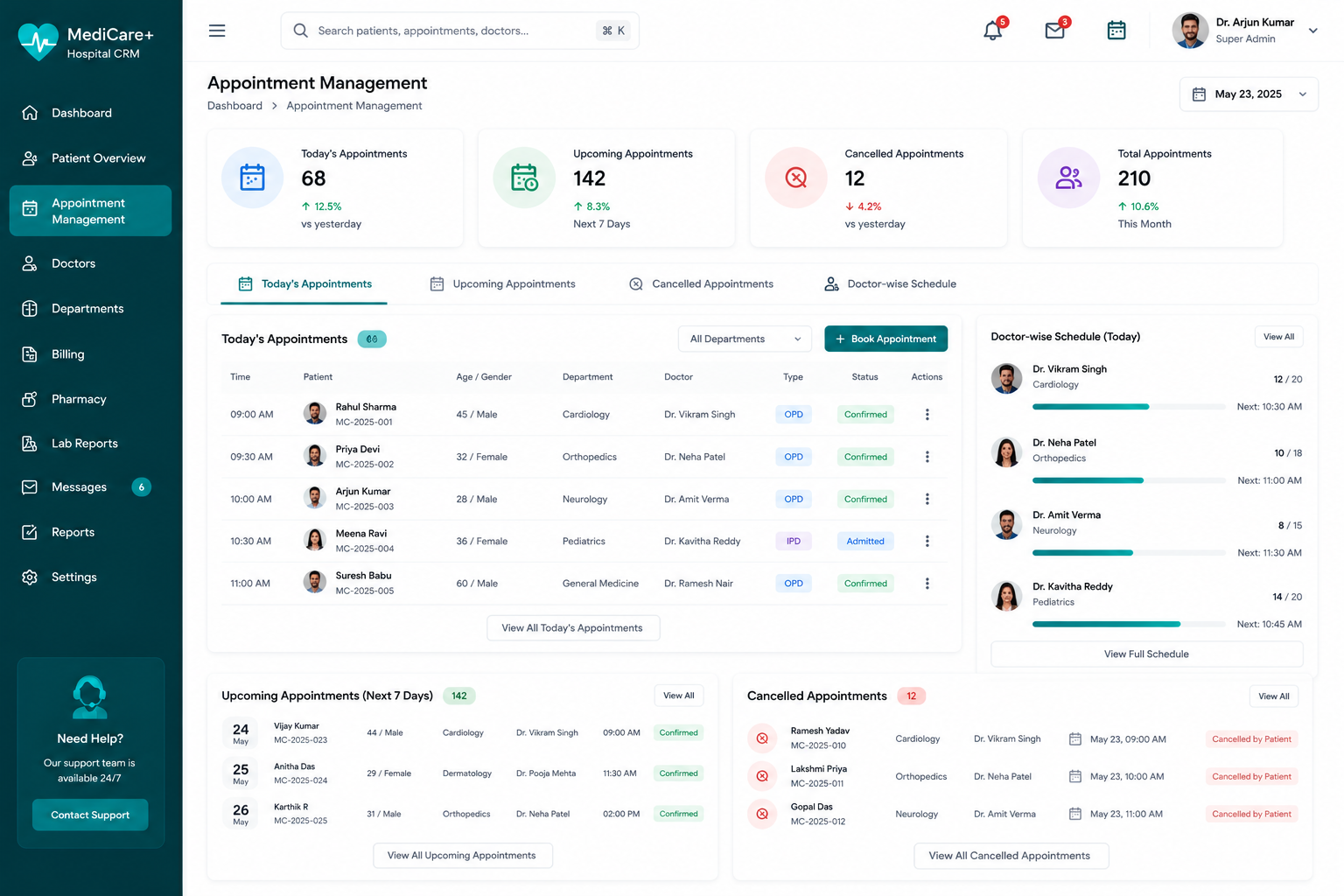
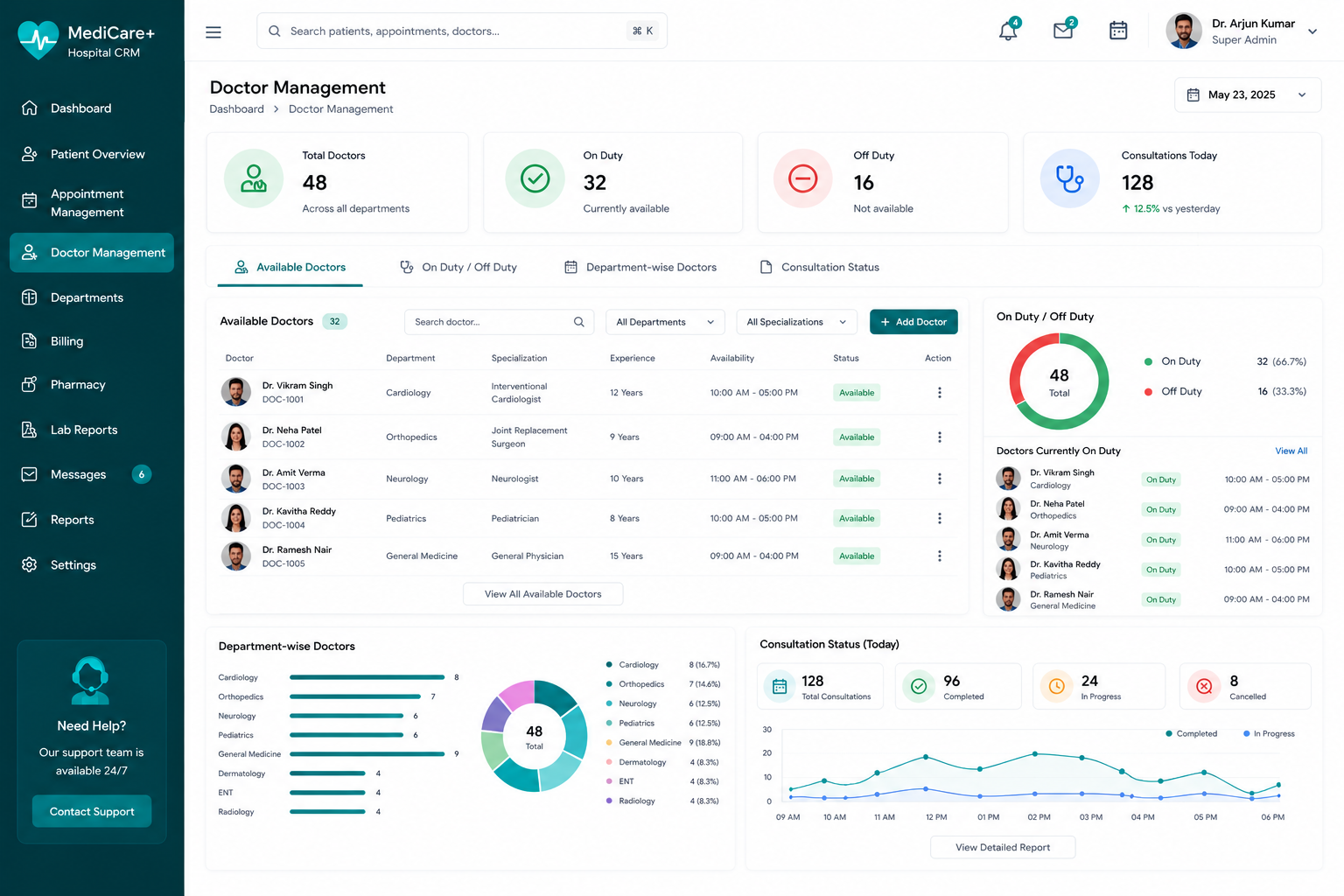
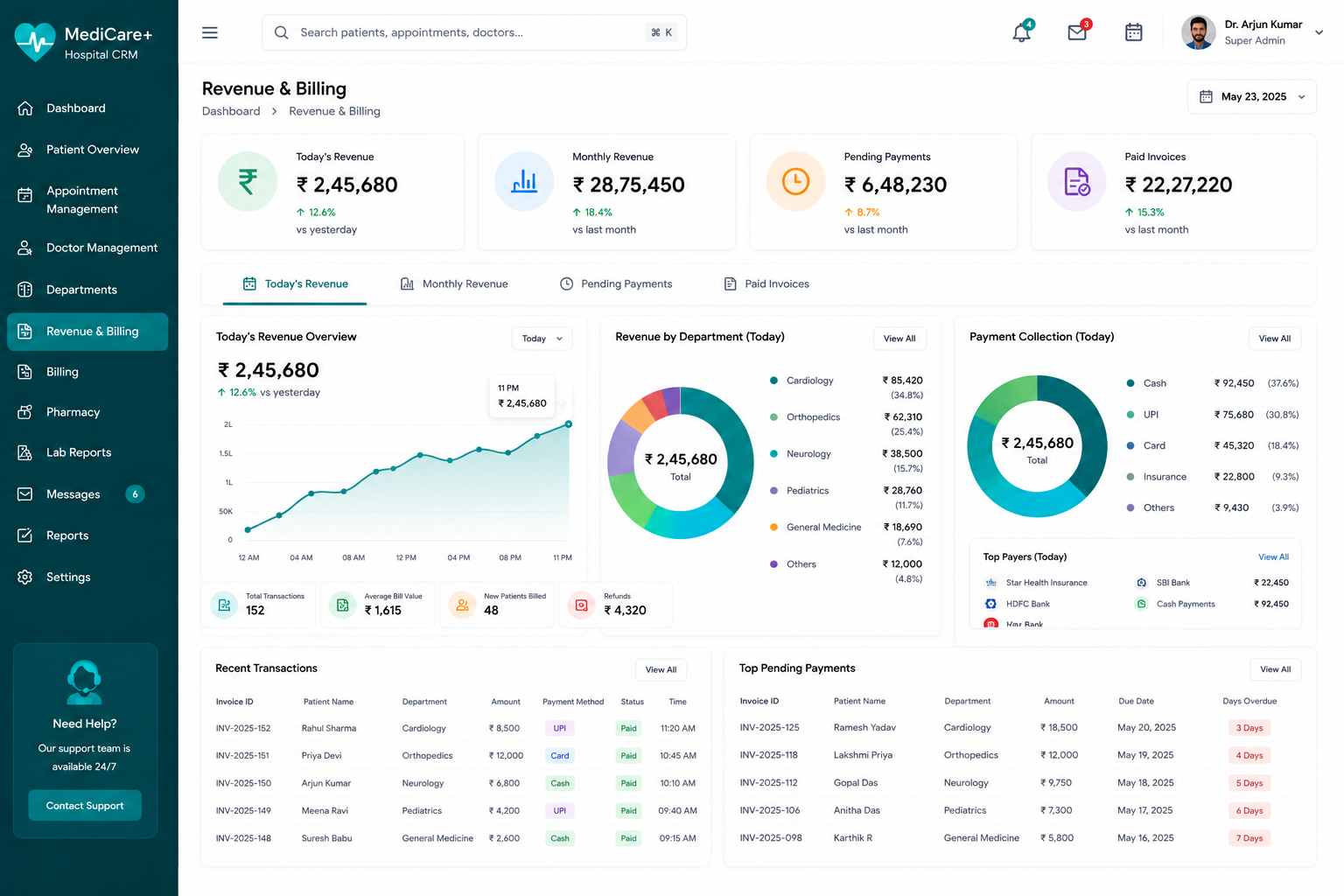
Transform the way your healthcare organization operates. Our CRM adapts to your unique processes, connecting every department to ensure a seamless experience for your patients and a structured workflow for your teams.
-
Fully Customizable: Tailor modules to fit your clinic or hospital perfectly.
-
Unified Ecosystem: Seamlessly integrate with your existing medical tools and EHR.
-
Data Security: Role-based access ensures sensitive patient data remains protected.
Why Choose Niishflow for Healthcare CRM Development?
Business-focused development
At Niishflow, the CRM is designed around real healthcare workflows, ensuring it naturally supports daily operations and improves overall efficiency.
Custom workflows
We design fully customized workflows that align with your processes, approval structures, and team responsibilities for smoother execution.
Integration-ready architecture
The system is built with a flexible architecture that enables seamless integration with external platforms, ensuring smooth and consistent data flow.
Scalable platform
Our solution is structured to grow alongside your organization, adapting easily to increasing users, data, and operational complexity.
Ongoing improvements
We continuously enhance the CRM based on evolving business needs, ensuring it stays relevant, efficient, and future-ready.
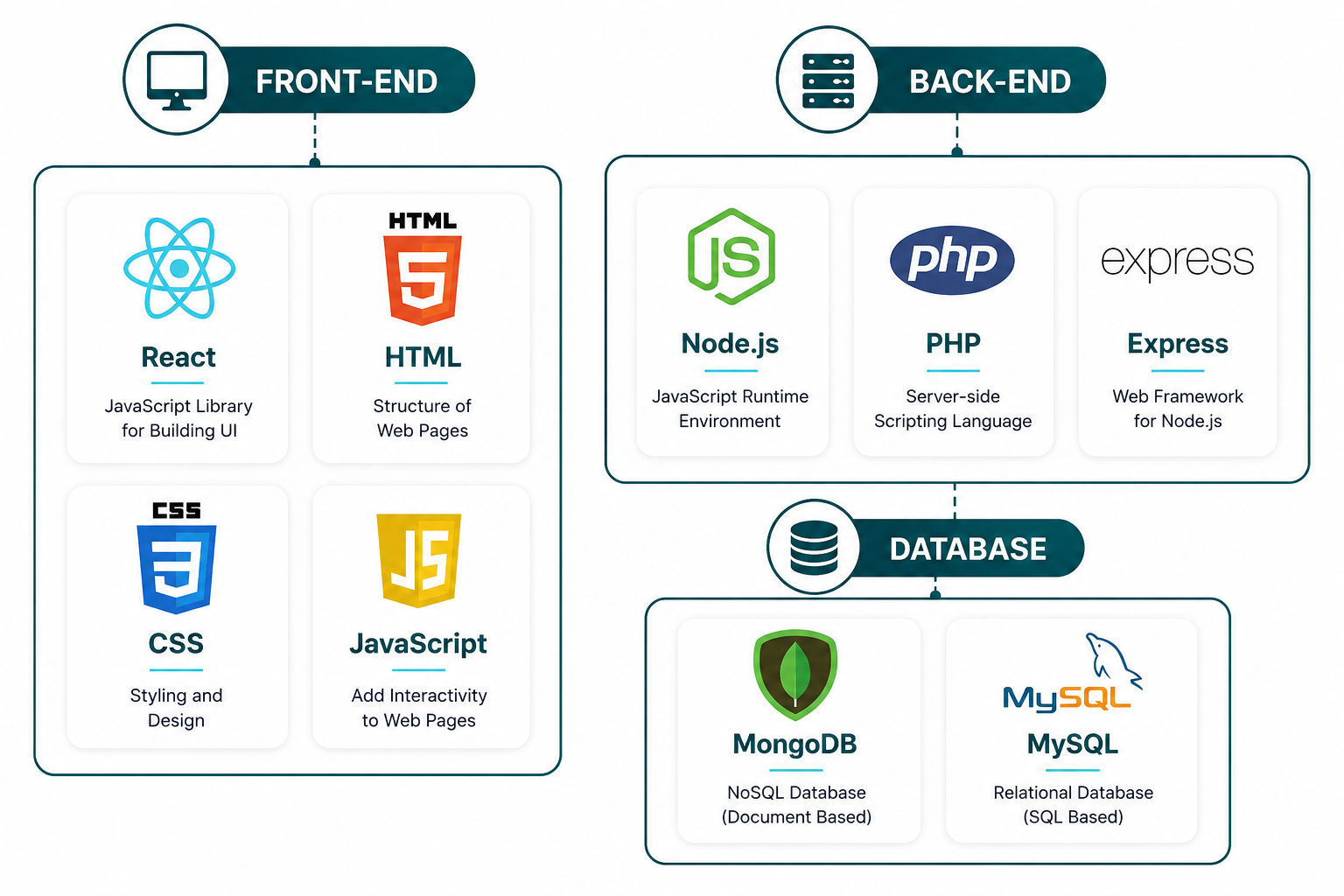
Technology used in our Hospital CRM
Frequently Asked Questions
Build a Healthcare CRM Around the
Way Your Team
Works
Your healthcare CRM should support your processes rather than create another system for your team to manage.
Whether you need a new platform, want to modernize an existing CRM, or need custom workflows and integrations, Niishflow can help you plan and develop a healthcare CRM tailored to your business requirements.
Get in touch today
We're here to help and answer any question you might have. We look forward to hearing from you.