CRM Software for
Banking
Industry
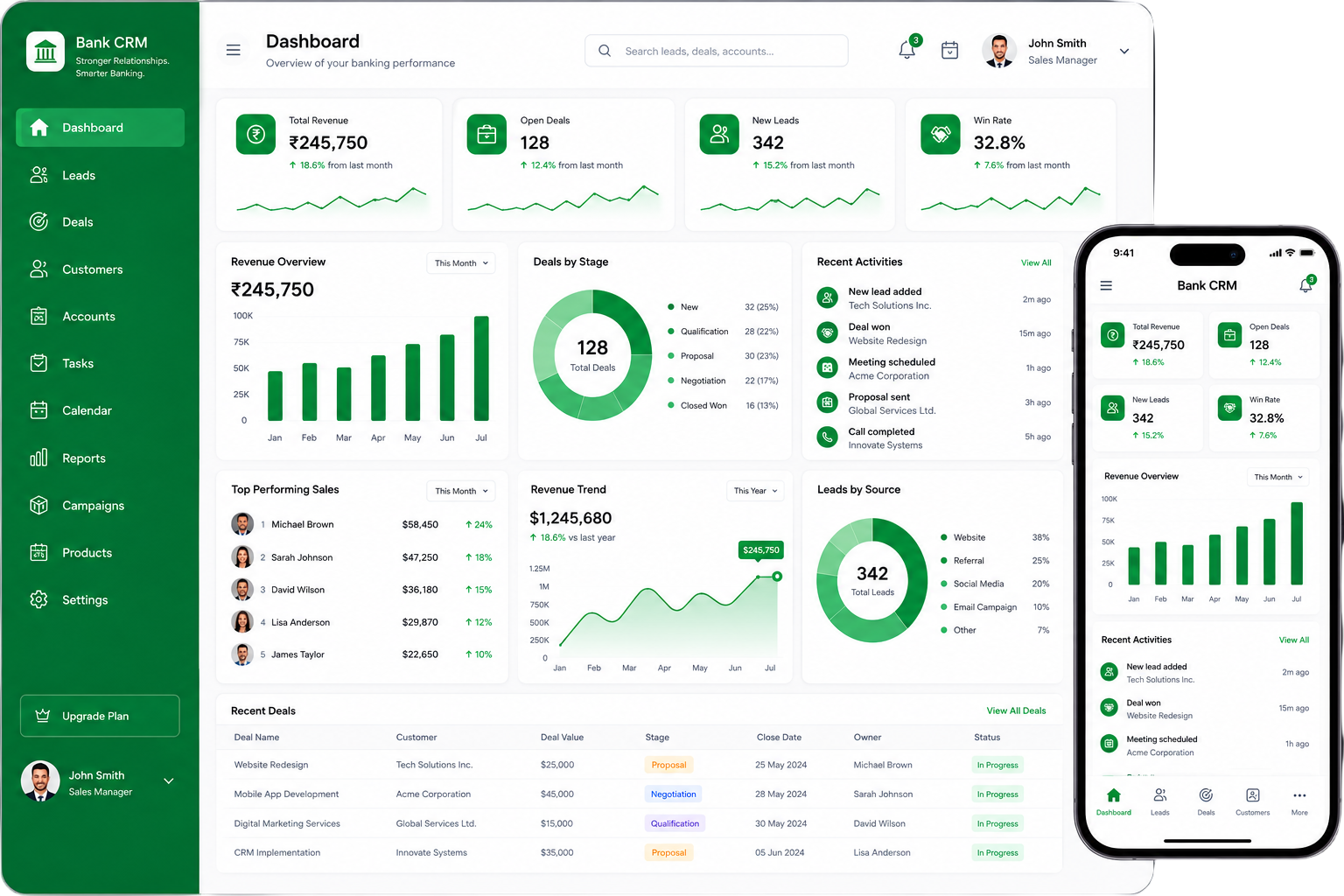
Modern banking depends on strong customer relationships as much as efficient internal operations. Niishflow builds custom CRM platforms for banks and financial institutions to organize customer data, enquiries, follow-ups, product journeys, communication, and team activities in one connected environment.


What Is CRM Software for the
Banking
Industry?
Banking CRM software is a platform that allows banks and financial institutions to manage the service activities, sales opportunities, enquiries, interactions and customer relationships. It brings relevant customer data into a structured view, which relationship managers, sales teams and service personnel can use to work with a better context.
The system can be used for onboarding, product inquiries, follow-up, customer communication, workflow automation, reporting and integration with current banking applications, depending on the requirements of the institution.
Why Do Banks Need a Dedicated CRM?
Banking teams typically have to deal with multiple branches, digital channels, customer calls, and multiple internal systems when dealing with customer interactions. A dedicated CRM centralizes these activities, providing a more holistic understanding of every customer and enhancing relationship management.
Without a CRM
- Customer information across different systems
- Manual follow-ups
- Scattered communication
- Limited team visibility
- Delayed response to customer requests
- Difficulty tracking customer history
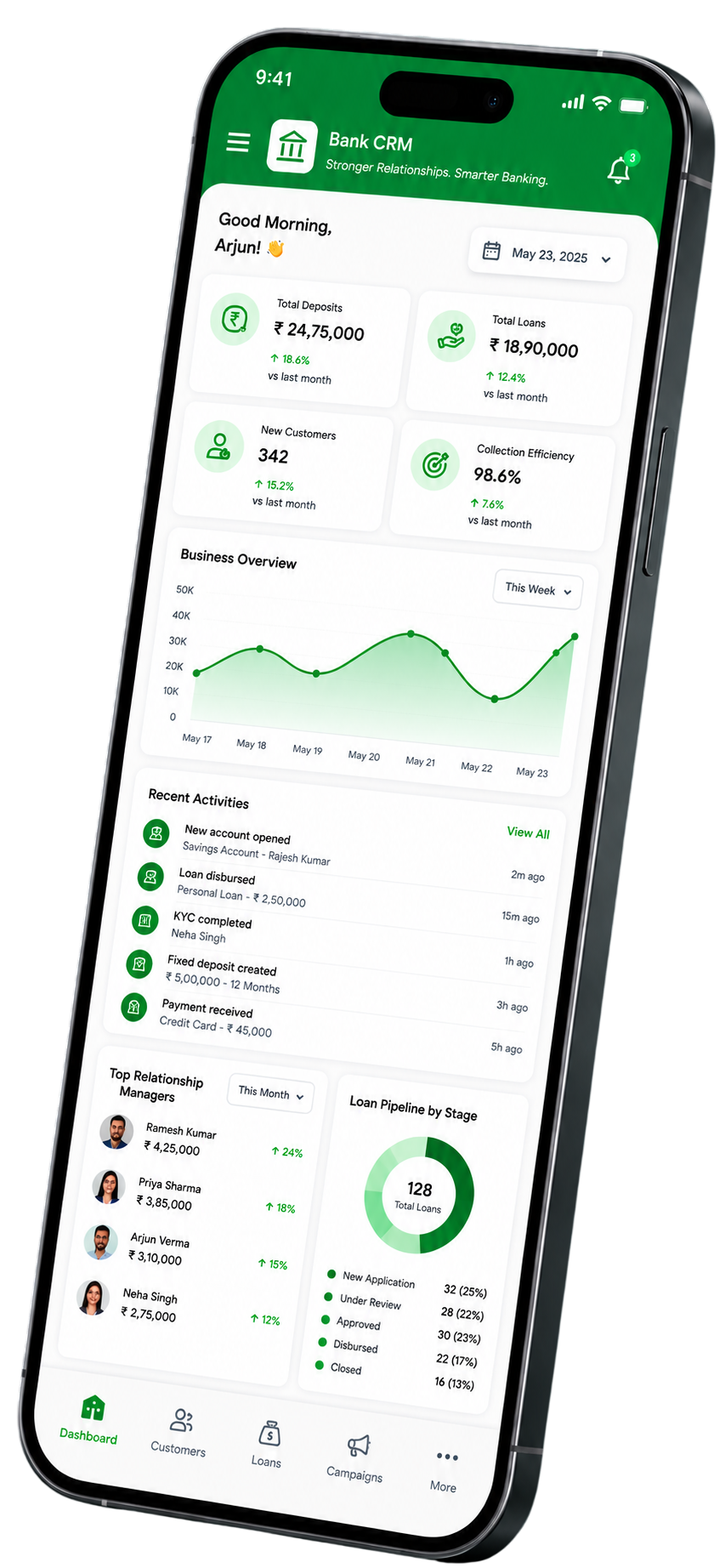
With a Banking CRM
- Centralized customer information
- Structured follow-ups
- Connected interactions
- Better team visibility
- Faster response to customer needs
- Complete customer interaction history
What Makes Our CRM
Stand Out?
We go beyond basic patient management by offering a seamless, deeply integrated ecosystem. Our intelligent automation and advanced analytics ensure you deliver exceptional care without the operational friction.
Customer Relationship Management
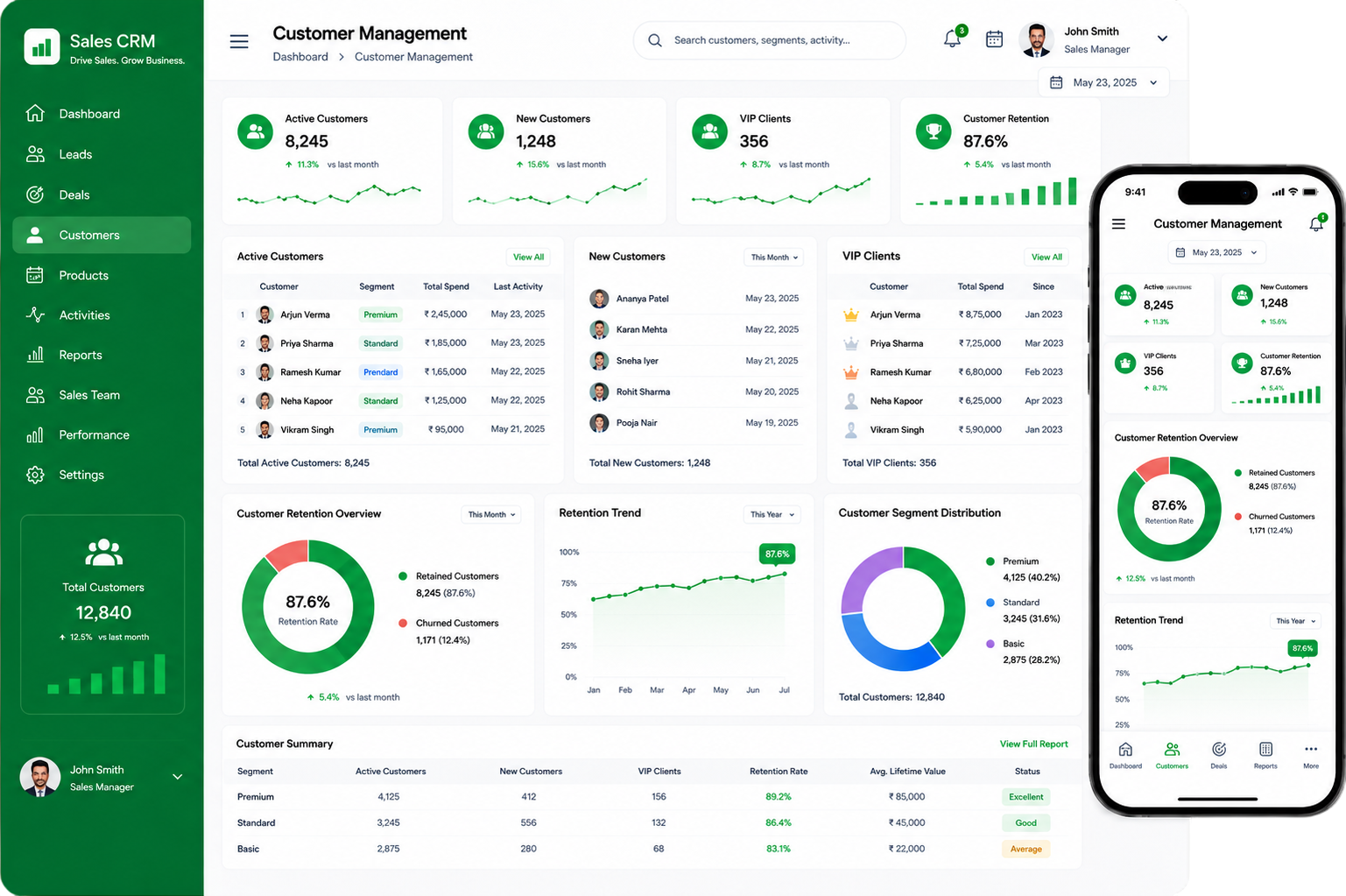
Maintain all customer data, relationship information, communication, tasks and product relevant information in a unified space. Employees are authorized to get information they need in order to perform their job, without having to search across multiple disconnected systems.

Lead and Enquiry Management
Capture prospects from websites, campaigns, branches, referrals, and other channels. Enquiries can be assigned to relationship managers or sales representatives and moved through clearly defined stages.

Product & Opportunity Tracking
A customer may be interested in a savings product today and a loan or investment service later. The CRM can track these opportunities independently while maintaining the overall customer relationship.

Customer Onboarding
In many cases, new customer onboarding requires a series of steps and teams. A CRM can aid in organizing communication, status updates, required actions and tasks across the whole onboarding experience.
Loan & Lending Workflows
Loan enquiries can be routed to the appropriate teams and tracked through defined stages. Follow-up activities, customer communication, and internal tasks can be organized without turning the CRM into a replacement for specialized lending systems.
Relationship Manager Workspace
Relationship managers can view their assigned customers, pending activities, opportunities, communication history, and follow-ups. This helps them prepare for customer conversations and manage their daily activities more efficiently.

Customer Service & Case Management
Customer requests and service cases can be recorded, assigned, prioritized, and monitored. Teams can see the status of open cases and maintain relevant communication history.

Workflow Automation
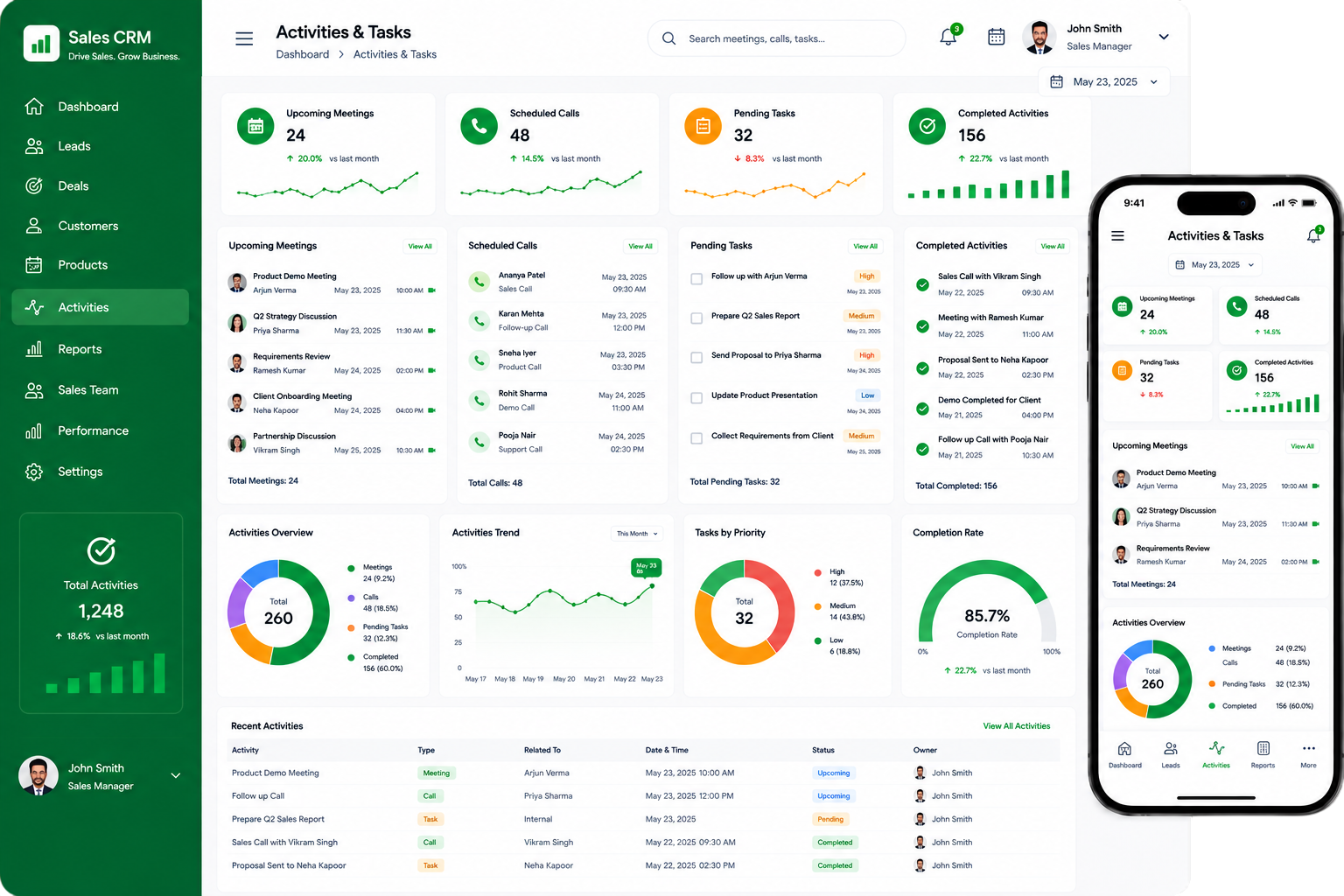
Common activities like assigning leads, reminders, notifications, creating tasks, and updating their status can be programmed.

Reports & Analytics
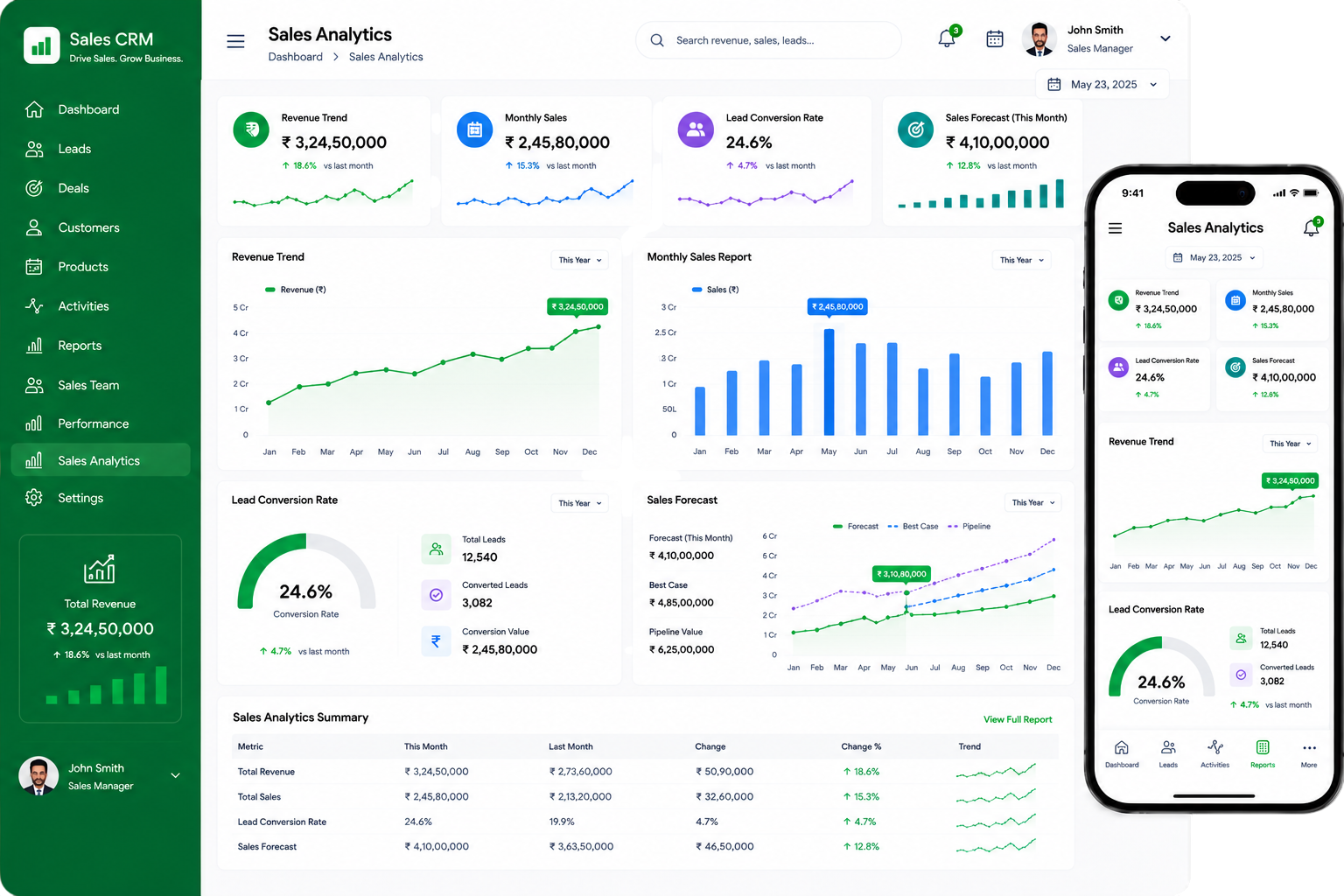
The customer acquisition, product enquiries, sales pipelines, follow-up activity, branch performance and other metrics can be tracked through dashboards and reports.
Role Based Access
Banking environments involve sensitive customer information and multiple levels of responsibility. Role-based permissions allow administrators to control access according to the user's role and business function.
Omnichannel Communication
Where supported through integrations, the CRM can connect email, SMS, telephony, messaging, and other communication channels so relevant interactions can be recorded within the customer journey.
Benefits of CRM
Software
for the Banking Industry
Empower your banking teams with a platform designed to enhance customer relationships, streamline operations, and boost overall efficiency.
A clearer customer picture
Bringing relevant relationship information together gives teams better context when they communicate with customers. A unified customer view is a common focus across banking CRM solutions because it helps employees understand relationships across products and channels.
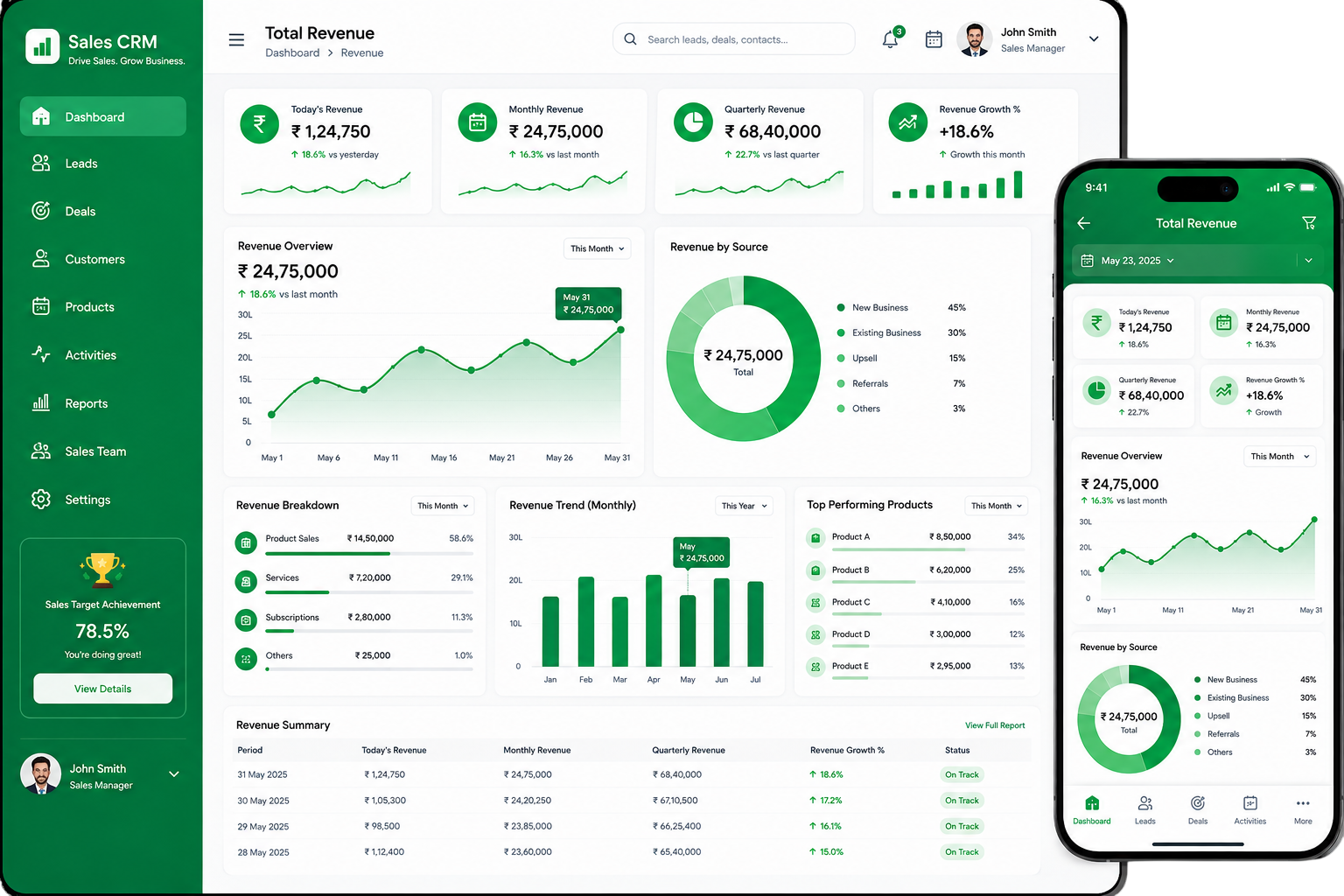
Banking CRM Development Services
Every financial institution has its own products, teams, processes, and technology environment. Our Banking CRM Development Services can be adapted to those requirements instead of forcing your team into a fixed workflow.
Our services include:
- Custom Banking CRM development
- Banking CRM software development
- Customer relationship management systems
- Lead and enquiry management
- Customer onboarding workflows
- Loan and product enquiry management
- Relationship manager dashboards
- Customer service and case management
- Workflow automation
- CRM integration and API development
- Data migration
- Reporting and analytics
- Role and permission management
- CRM modernization
- Ongoing maintenance and enhancement
The specific modules can be selected based on your organization's processes, technology, roles, and future plans.
CRM for Different Banking Segments
Retail Banking
Manage customer enquiries, product interests, follow-ups, service interactions, and relationship activities for individual customers.

Commercial & Corporate Banking
Support relationship managers with business customer profiles, opportunities, communication history, follow-ups, and account relationship activities.

Lending & Loan Services
Organize loan enquiries, customer communication, follow-up activities, and internal workflows around the lending journey.
Wealth Management
Maintain customer relationships, communication history, service activities, and opportunities while giving advisors a structured view of their client portfolio.

Digital Banking
Connect digital enquiries, customer communication, support requests, and relationship activities to create a more connected customer experience.
Connecting Your CRM With Existing Banking Systems
A CRM should not automatically mean replacing the systems your bank already depends on. Most financial institutions operate with a collection of specialized applications. The CRM can be designed as a connected layer that exchanges relevant information with those systems through APIs or other supported integration methods.
Depending on the environment, integrations may include:
-
Core banking systems
-
Loan management platforms
-
KYC & identity verification services
-
Payment platforms
-
Credit and financial systems
-
Website forms
-
Email and SMS platforms
-
Telephony systems
-
Customer portals
-
Accounting software
-
Business intelligence tools
-
Internal applications
-
Third-party APIs
Integration design should be based on the actual systems involved, the information that needs to be exchanged, access permissions, and the institution's security requirements. Banking CRM solutions commonly integrate with core banking, KYC/AML, lending, payment, communication, and analytics systems.
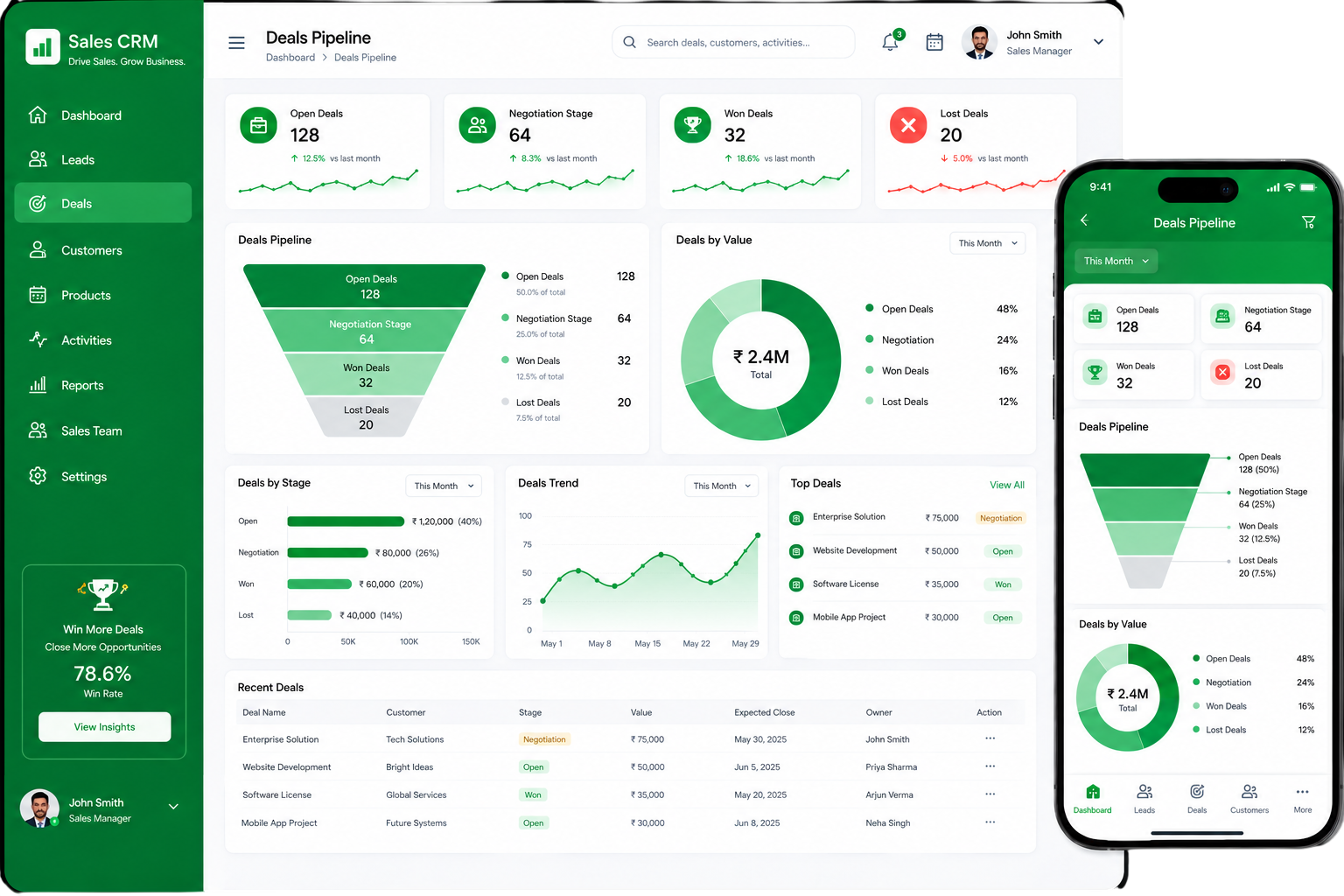
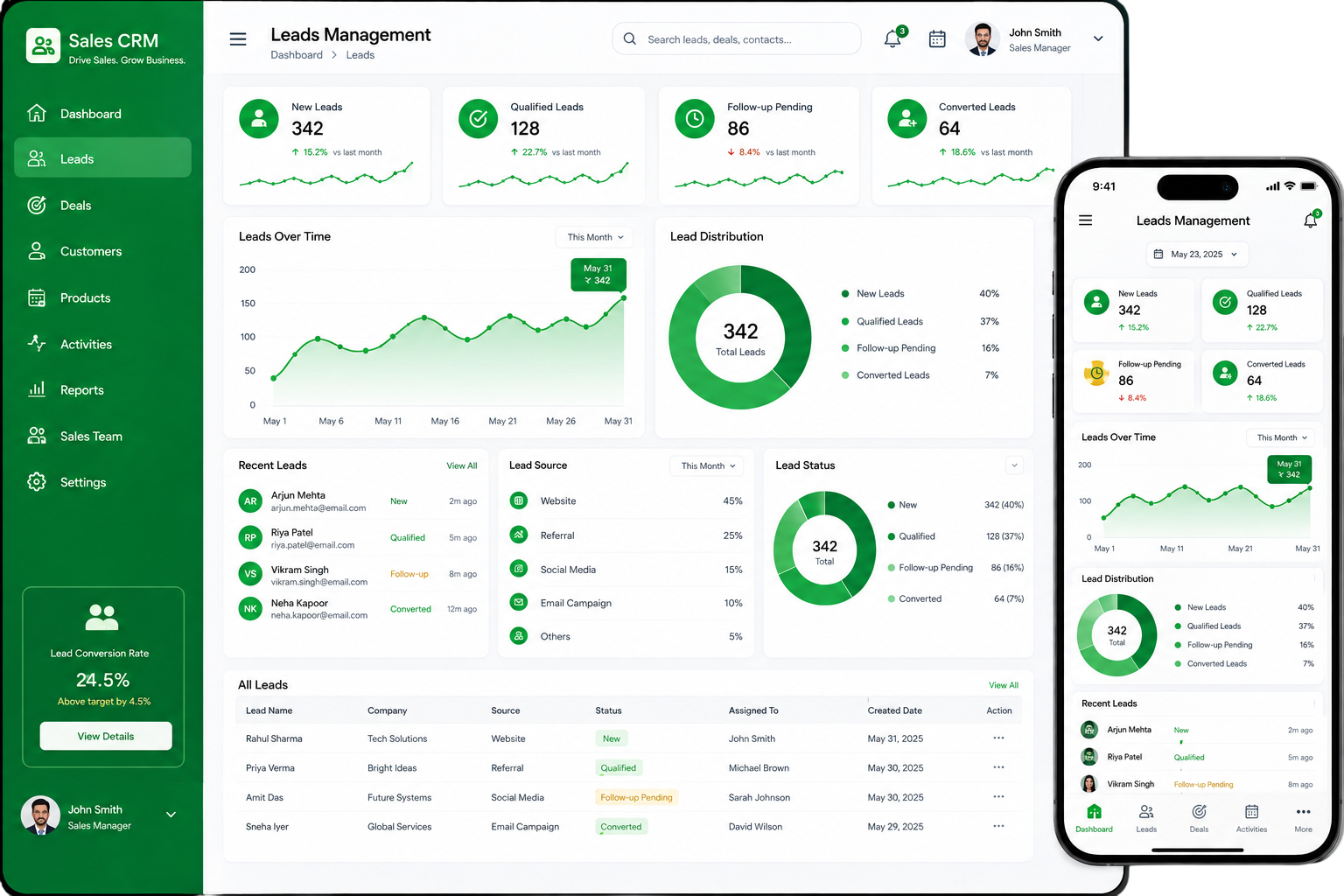
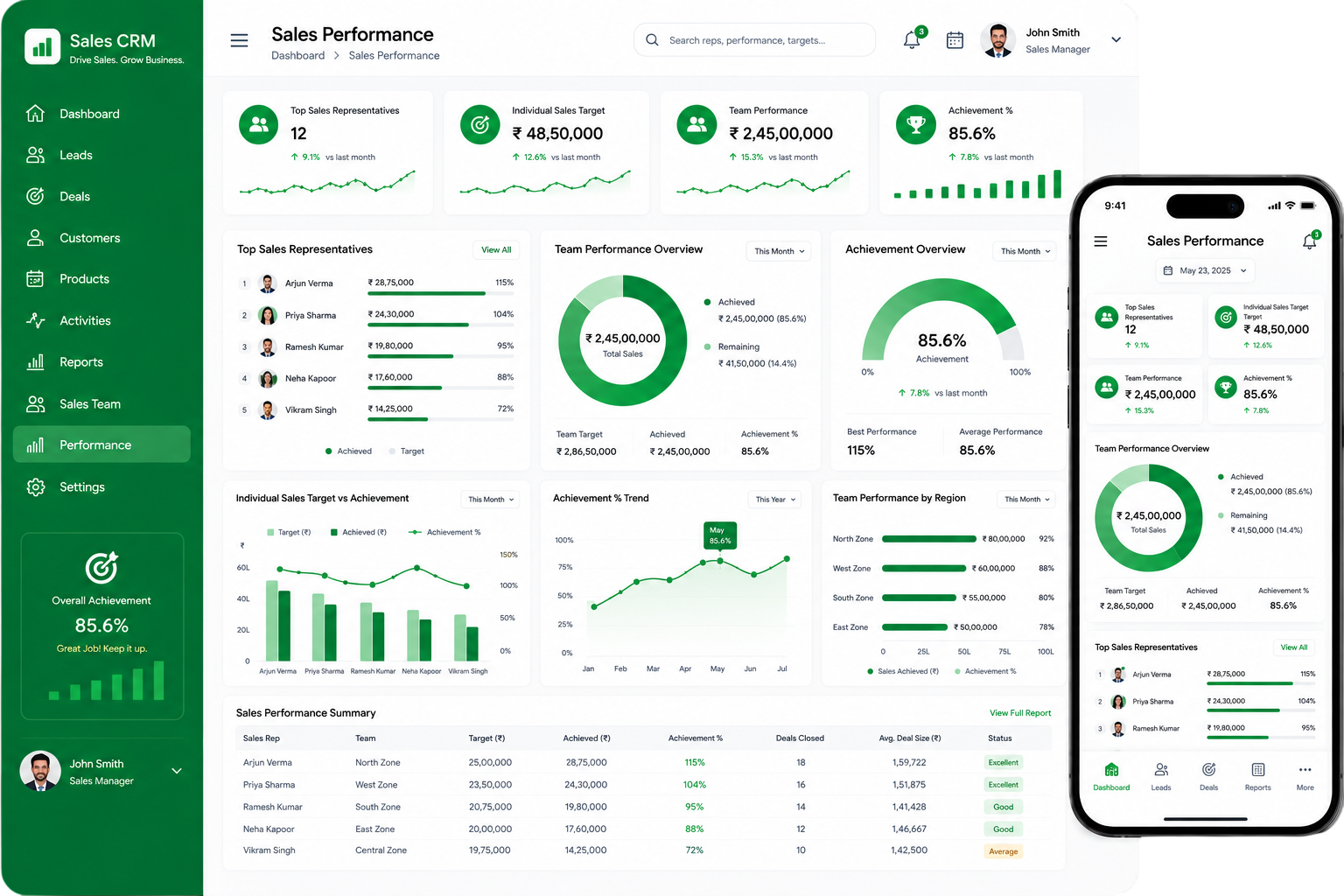
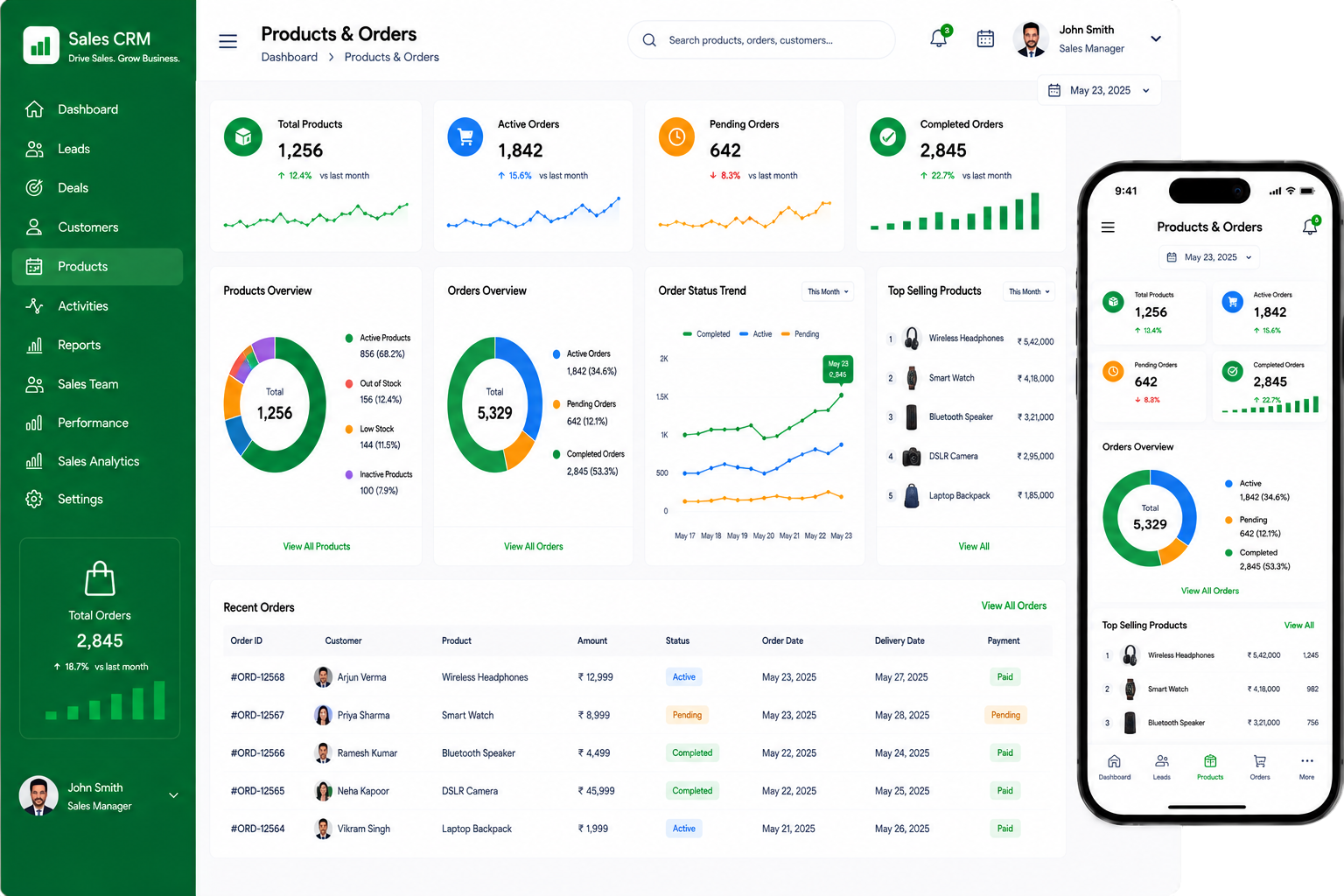
Inside our Sales CRM
Security & Access Control
Customer information requires careful handling, particularly in financial services. The CRM can be designed with security controls such as:
-
Role-based access
-
User permissions
-
Authentication controls
-
Data encryption
-
Audit logging
-
Session management
-
Secure API communication
-
Activity monitoring
-
Controlled data access
-
Backup and recovery
The exact security architecture should be determined according to the institution's technology environment, data requirements, applicable regulations, and internal security policies. Security and auditability are recurring requirements in banking CRM implementations because the system may handle sensitive customer information and interactions.
Our Banking CRM Development Process
We start with the business problem rather than a predetermined feature list.
Understand the Existing Workflow
We review how your teams currently manage customers, enquiries, product opportunities, service requests, and follow-ups. This gives us a practical understanding of where the CRM needs to fit.


Map Users & Responsibilities
Users require varying kinds of information. The roles are identified and what each team member can see, update, approve or manage is determined.
Define Modules & Integrations
Once the workflow is clear, we decide which CRM modules are required and identify the systems that need to exchange information with the platform.


Design the User Experience
Dashboards, customer profiles, pipelines, forms, reports and workflows are created to meet the needs of the people who are going to use the system.
Develop & Integrate
The planned modules are developed and connected with relevant systems. Features are built in stages so the workflow can be reviewed during development.


Test Before Launch
We test user permissions, workflows, data handling, integrations, notifications, reports, and other important functions before deployment.
Launch & Continue Improving
Once launched, the system can be monitored and fine-tuned as per the actual usage, new requirements, additional integrations, or even changes in the organization.

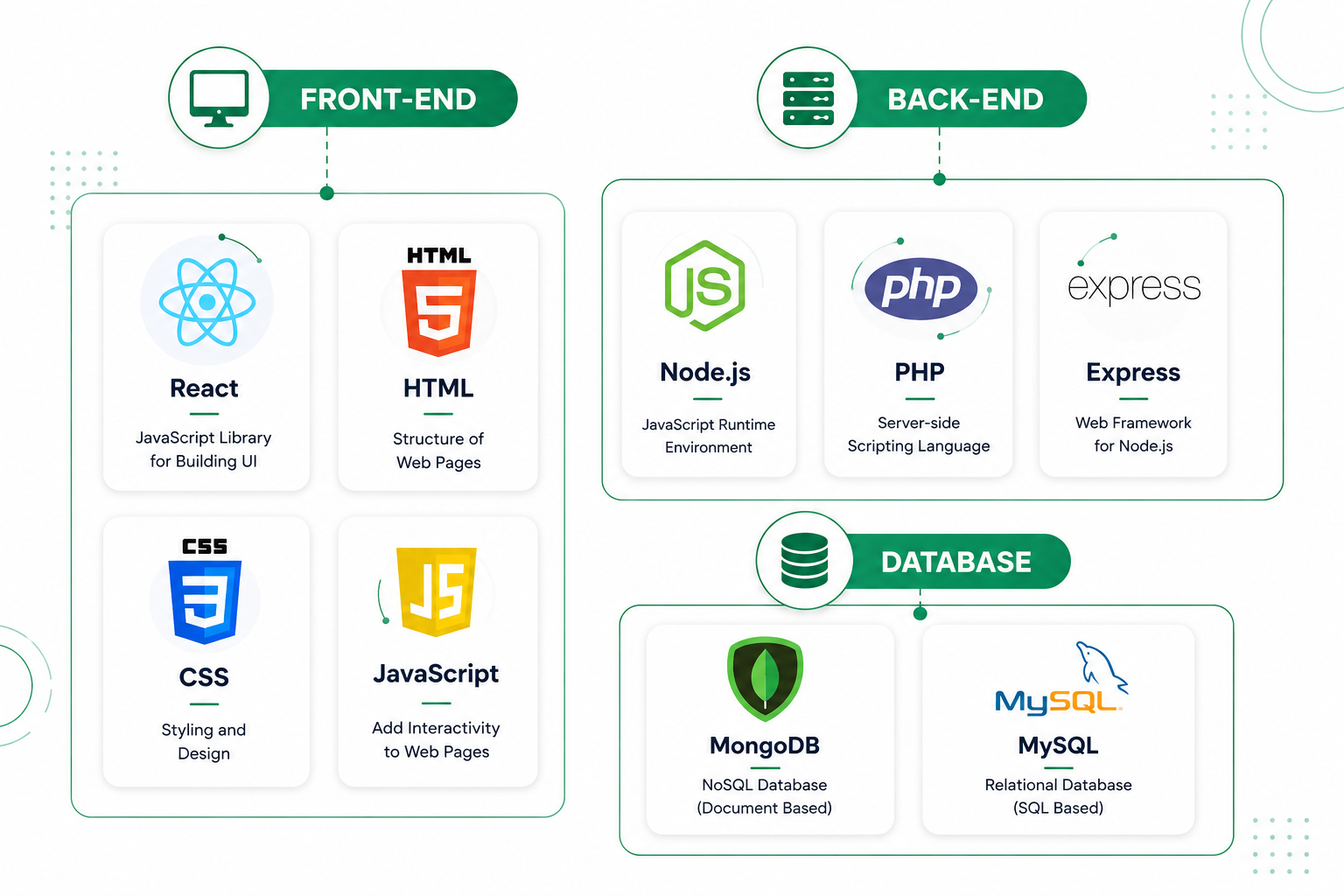
Technology used in our Sales CRM
Why Choose Niishflow for Banking CRM Development?
Instead of adding unnecessary features to a project, Niishflow aims to construct CRM systems around real business processes. Before making decisions on how the platform is structured, we consider how your teams are handling customer relationships, enquiries, follow-ups, reporting and integrations. This approach helps create a CRM that fits your institution's workflows and is practical for everyday use.
Our development approach also incorporates flexibility for future changes. The CRM can be extended as your organization puts more products, users, branches, integrations, and new customer journeys in place, without having to begin again. The platform can be supported from the beginning of planning and development, through the platform integration, deployment and continuous improvement.
Frequently Asked Questions
Get in touch today
We're here to help and answer any question you might have. We look forward to hearing from you.